

UAE weather guide: 10 essential safety tips every resident should know
Official guidance covers motorists, homes, travel and emergencies
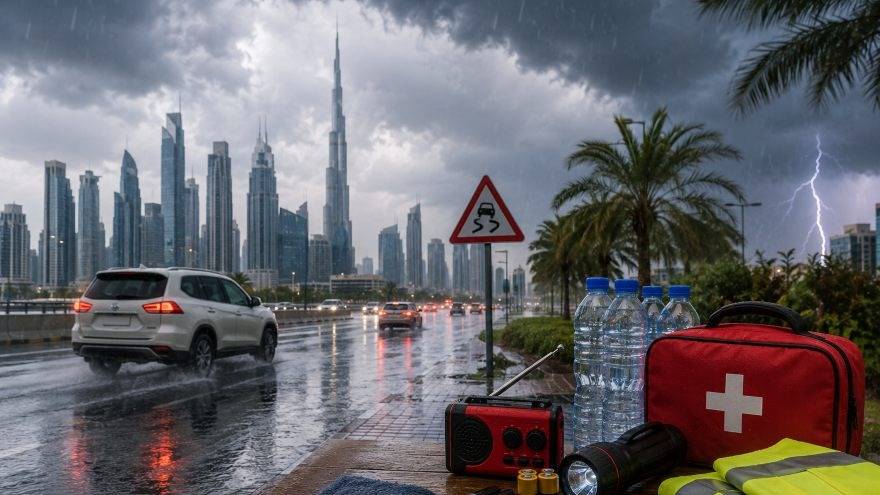
ABU DHABI – Rain, thunderstorms and strong winds are forecast to affect parts of the UAE this week, prompting authorities to remind residents to stay prepared and follow official safety advice.
The guidance, issued as unstable weather continues across the country, covers everything from driving and protecting homes to emergency contacts and travel planning.
The safety guidelines, developed by Abu Dhabi authorities, aim to reduce risks during heavy rain, flooding, hail, dust storms and strong winds. Here's what every resident should know.
Know the emergency numbers
Use the correct number depending on the incident:
- 999: Life-threatening emergencies, people trapped in floodwater, major traffic accidents, electrical fires and serious property damage.
- 993: Flooded streets, fallen trees, landslides and water accumulation.
- 991: Electricity emergencies.
- 992: Water supply emergencies.
- 02 818 0000 (call or WhatsApp): Blocked sewage lines or leaks through TAQA Water Solutions.
Prepare your home
Before bad weather arrives:
- Secure outdoor furniture, plants and loose objects.
- Clean roof drainage systems.
- Check electrical wiring and equipment.
- Keep flashlights, batteries, fire extinguishers and first-aid kits ready.
- Park vehicles in covered or elevated areas whenever possible.
Get your vehicle ready
Authorities recommend checking:
- Tyres and brakes.
- Windscreen wipers.
- Emergency kit and fire extinguisher.
- Fuel level before travelling.
- Avoid parking beneath trees, electricity poles or in low-lying areas that could flood.
Drive with extra caution
During rain or dust storms:
- Never drive through floodwater or wadis.
- Reduce speed and leave extra distance from the vehicle ahead.
- Use headlights when visibility drops.
- If you must stop, pull over in a safe place and switch on hazard lights.
Stay indoors during storms
When thunderstorms or strong winds develop:
- Keep away from windows and glass doors.
- Avoid standing near trees or electricity poles.
- Keep children indoors.
- Do not touch fallen power lines or exposed electrical equipment.
Limit outdoor activities
Residents should avoid:
- Beaches and marine activities.
- Construction sites.
- Walking through flooded areas.
- Unnecessary outdoor trips during heavy rain or strong winds.
- People with respiratory conditions are advised to wear protective masks if they need to go outside during dusty weather.
Check travel plans first
Before leaving home:
- Confirm flight or sea travel schedules.
- Allow extra travel time for congestion and road closures.
- Monitor official weather updates before heading to airports or ports.
Avoid floodwater afterwards
Even after rain stops:
- Do not walk or swim in standing water.
- Avoid using floodwater for any purpose.
- Stay away from stagnant water, which may contain harmful bacteria or attract insects.
- Do not consume food that has come into contact with floodwater.
Report hazards immediately
Authorities advise residents not to remove fallen trees, lift manhole covers or attempt to clear flooded roads themselves. Instead, report hazards through the designated emergency numbers so specialist teams can respond safely.
Follow official updates
Weather conditions can change rapidly. Residents are urged to monitor updates from the National Centre of Meteorology and relevant UAE authorities, follow official instructions and avoid circulating unverified information during periods of unstable weather.